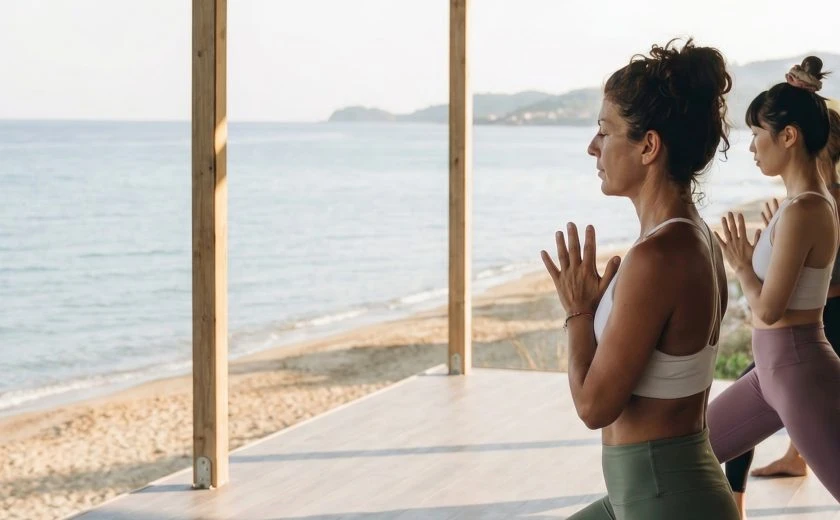
Comprehensive guide to cultivating inner peace through structured yoga practice, breath regulation, and professional development within YogaUnion Bali programs.
How to Find Inner Peace with Yoga is not about escaping stress. It is about developing the physical, neurological, and psychological tools that allow you to respond to life with clarity and stability.
True inner peace emerges when the body is strong, the breath is regulated, and the nervous system is balanced. Yoga develops mobility, breath efficiency, structural alignment, and autonomic regulation, creating the internal conditions necessary for sustained calm.
Intelligent sequencing enhances cardiovascular endurance and muscular stability while reducing unnecessary tension. Breath coordination strengthens vagal tone, supports hormonal balance, and improves emotional regulation.
At YogaUnion Bali, inner peace is not treated as an abstract concept. It is cultivated through alignment mechanics, sequencing intelligence, cueing clarity, and injury prevention, transforming personal practice into professional competence and embodied stability.
The Bali environment further supports immersive focus, internal recalibration, and meaningful personal evolution.
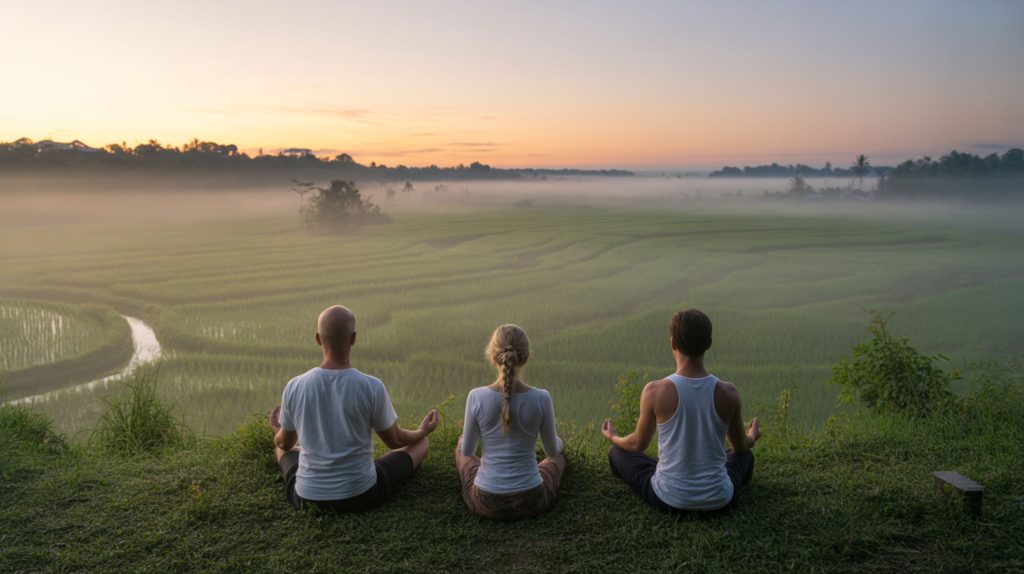
The Physiological Foundation of Inner Peace
Inner calm begins with nervous system regulation. When movement and breath are synchronized, the body shifts from chronic sympathetic activation toward balanced parasympathetic recovery.
Structured yoga practice supports:
• Autonomic nervous system regulation
• Reduced cortisol levels and stress response
• Improved respiratory efficiency
• Hormonal balance and recovery capacity
Through repetition and consistency, the body learns safety. Stability becomes a trained response rather than a temporary state.
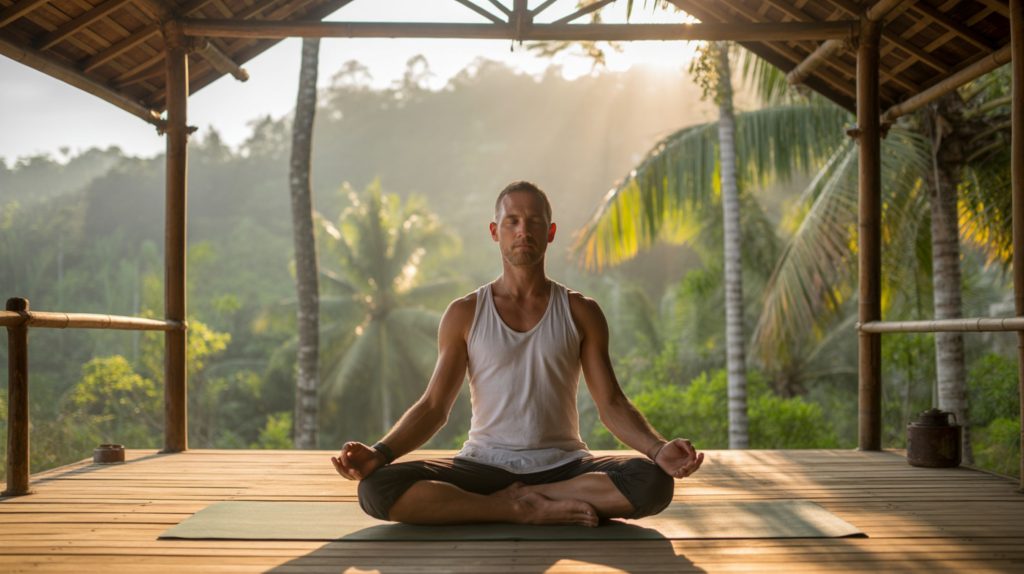
Breath as the Anchor of Mental Clarity
Breath regulation is central to cultivating peace. Techniques such as controlled diaphragmatic breathing and structured pranayama improve:
• Oxygen efficiency and circulation
• Heart rate variability
• Emotional steadiness
• Mental focus and cognitive clarity
When breath slows, the mind follows. This connection forms the bridge between physical discipline and psychological resilience.

Strength, Stillness, and Emotional Balance
Inner peace is not passive. It requires both structural strength and the capacity for stillness.
Dynamic sequences build physical resilience and confidence. Sustained postures cultivate patience and internal observation. Together, they enhance:
• Stress resilience
• Emotional regulation capacity
• Self-awareness and reflective stability
• Recovery from physical and mental fatigue
Balanced training prevents burnout and supports long-term wellbeing.
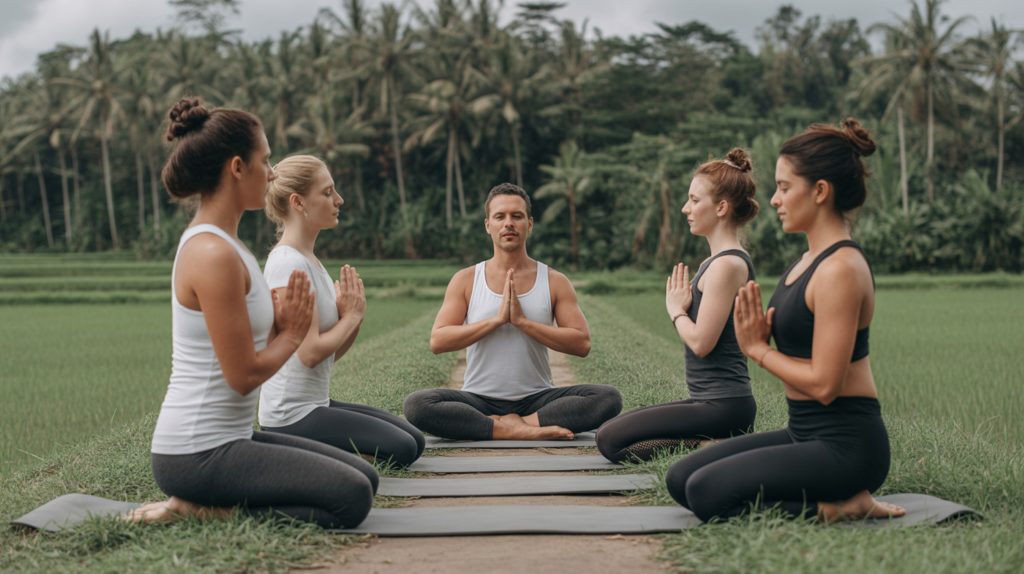
Professional Development at YogaUnion Bali
Within YogaUnion Bali’s internationally accredited programs, students refine:
• Alignment mechanics and structural precision
• Intelligent sequencing across practice intensities
• Clear cueing strategies for safe instruction
• Injury prevention and modification techniques
• Breath integration within dynamic and restorative formats
This approach ensures that inner peace is not just experienced, it is understood, taught, and sustained.
The immersive Bali setting deepens this transformation. Surrounded by natural serenity and cultural depth, practitioners experience meaningful recalibration of both body and mind.
Final Thoughts
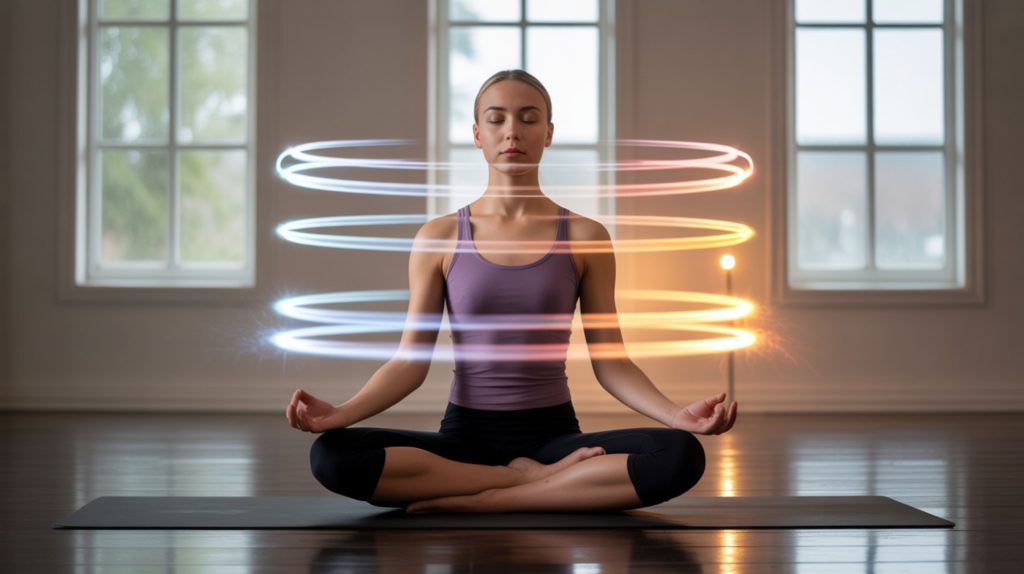
Finding inner peace is not about escaping life’s challenges but learning how to respond to them with clarity, awareness, and balance. Yoga offers a powerful path toward this state by integrating movement, conscious breathing, mindfulness, and meditation into daily life. Through consistent practice, yoga helps calm the nervous system, quiet the mind, and reconnect you with a deeper sense of presence and self-awareness.
Inner peace develops gradually. Each breath, each moment of stillness, and each mindful movement strengthens your ability to stay grounded even when life becomes busy or stressful. Over time, yoga becomes not just a practice on the mat but a way of approaching life with greater patience, acceptance, and compassion.
If you feel inspired to deepen this journey and explore the inner dimensions of yoga more deeply, you may want to discover YogaUnion’s specialised trainings.
50H Self-Enquiry & Meditation Teacher Training
This training explores meditation techniques, mindfulness practices, and self-inquiry methods that help cultivate deeper awareness and emotional balance.
You can also deepen your understanding of breath and nervous system regulation through:
50H Breath & Somatics Teacher Training in Bali
50H Breath & Somatics Teacher Training in Greece
These immersive programs allow you to explore yoga beyond physical postures and develop the tools needed to cultivate lasting inner peace both in your own life and in the lives of others.